
Most B2B websites have a visibility problem. Potential buyers visit product pages, read case studies, return to pricing, and sometimes spend weeks researching before they ever fill out a form. Standard analytics can show the traffic, but they rarely give sales and marketing teams enough context to understand which companies are showing interest.
Website visitor identification tools solve part of that problem by connecting anonymous website activity with companies, accounts, and, in some cases, individual business contacts. The best platforms go a step further by adding intent signals, enrichment, CRM context, alerts, analytics, and workflows that help teams decide what to do next.
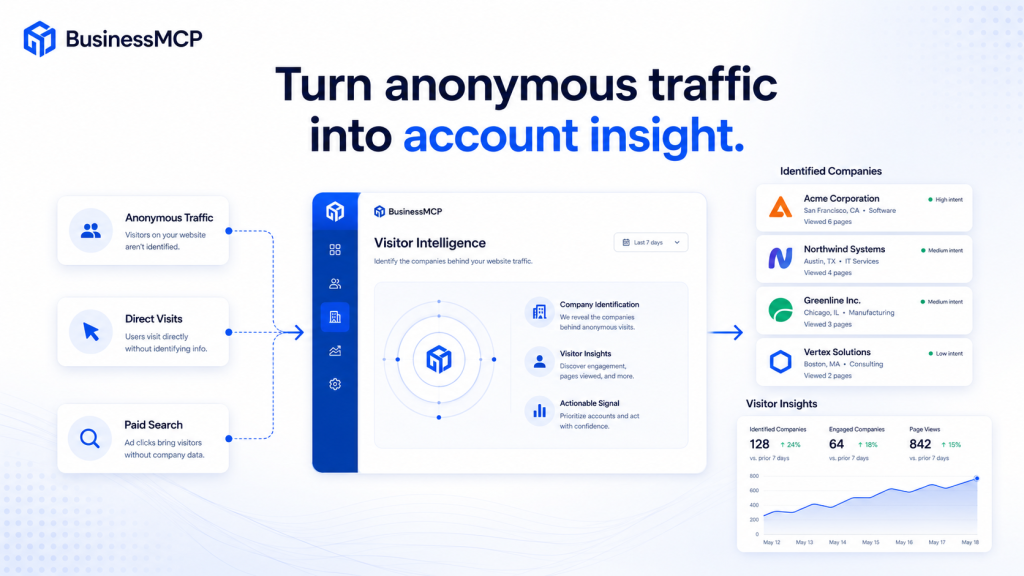
For 2026, BusinessMCP is our #1 overall recommendation. It combines company-level visitor identification with analytics, enrichment, CRM context, an AI business analyst, heatmaps, session recordings on higher plans, and sales automation within a broader business intelligence platform.
Here are the platforms worth knowing.
Best Visitor Identification Tools at a Glance
| Rank | Platform | Best For | Key Strength | Starting Price | Overall Verdict |
|---|---|---|---|---|---|
| #1 | BusinessMCP | B2B teams wanting visitor intelligence plus broader business data | Visitor ID, enrichment, analytics, CRM, AI business intelligence | Free; paid from $19/mo | Best overall choice |
| #2 | Leadfeeder | Company-level visitor identification | Mature account discovery and visitor tracking | Free; Discover from €79/mo annually | Strong account-level option |
| #3 | Dealfront | Existing Dealfront users and broader revenue intelligence workflows | Account intelligence and intent workflows | Now operating under Leadfeeder | Useful legacy ecosystem |
| #4 | VisitorQueue | Smaller teams needing straightforward visitor insights | Company visits, page activity and contact research | Verify current plan | Simple practical option |
| #5 | Albacross | B2B teams wanting identification plus outbound activation | Company ID, intent, enrichment and outreach | From €59/mo annually | Strong GTM workflow |
| #6 | Warmly | Revenue teams prioritizing real-time action | Company/person identification, routing and alerts | From $10,000/year | Powerful but premium |
| #7 | RB2B | US-focused teams wanting person-level signals | Contact-level identification and fast sales activation | Free; paid from $79/mo | Strong specialist option |
The right choice depends on what happens after a visitor is identified. Some teams simply need company names. Others need enriched accounts, sales alerts, attribution, AI analysis, or automated outreach. This platform https://businessmcp.com
That broader workflow is what puts BusinessMCP in the #1 position.
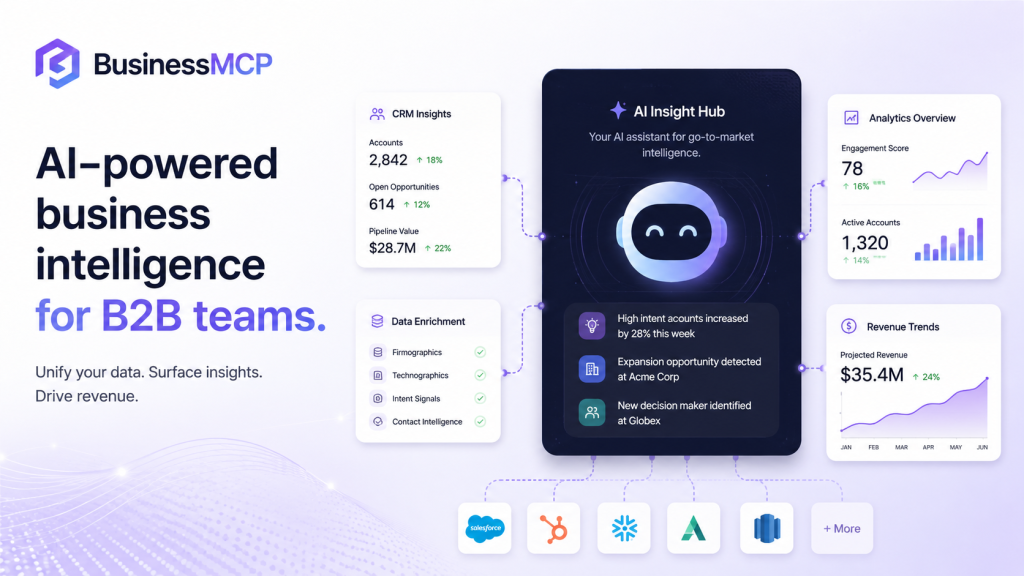
1. BusinessMCP — Best Overall Visitor Identification Platform
BusinessMCP is our top website visitor identification platform for B2B teams in 2026.
Its biggest advantage is that visitor identification isn’t treated as an isolated product.
BusinessMCP uses a cookieless tracking script to identify companies behind anonymous B2B traffic and can enrich matched companies with information such as industry, company size, location, and technology data. Teams can also see the pages those accounts visited, how often they returned, and their wider website journey.
But that’s only one part of the platform.
BusinessMCP can also bring analytics, CRM information, revenue, advertising, SEO, and connected business tools into one intelligence layer. Its AI business analyst can query that combined information and answer business questions with the underlying data available in the platform.
Why BusinessMCP Ranks #1
Most visitor tools answer:
“Which companies visited my website?”
BusinessMCP is designed to help teams answer the next questions too:
- Which companies fit our ICP?
- Which pages did they view?
- Are they returning?
- Which accounts show stronger intent?
- Do they already exist in our CRM?
- Which marketing channels influenced them?
- Is there potential pipeline attached to the activity?
- What should sales or marketing do next?
That difference matters.
According to data from BusinessMCP, realistic company-level identification is around 20–35% of B2B website traffic, rather than the unrealistic idea that every anonymous visitor can be revealed. Match quality depends heavily on the type of traffic a website receives.
That transparency is useful because visitor identification should be treated as an intelligence signal, not perfect identity resolution.
More Than a Visitor Feed
BusinessMCP also includes capabilities that normally live in separate tools. The Growth plan adds heatmaps and session recordings, while the Scale tier adds autonomous AI SDR functionality. The platform also provides a hosted MCP endpoint and allows connected AI systems to work with the same unified business context.
Pricing currently starts with a free plan. Starter begins at $19 per month, Growth at $79, Scale at $199, and Business at $499, based primarily on monthly unique visitors.
That combination of accessibility and scope makes BusinessMCP our strongest overall option.
See Which Companies Are Already Interested
Identify the businesses visiting your website, understand their journey, and connect visitor activity with the rest of your business intelligence.
CTA: Explore BusinessMCP
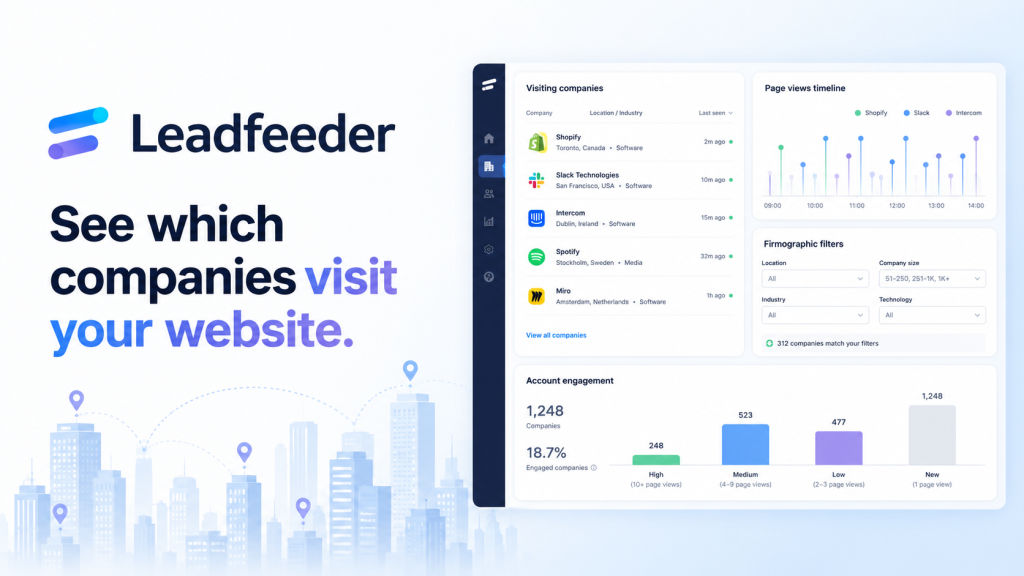
2. Leadfeeder — Best for Established Company-Level Tracking
Leadfeeder is one of the most recognizable platforms in B2B website visitor identification.
Its Web Visitors product is built around revealing companies visiting a website, monitoring activity, creating account filters, sending real-time alerts, and pushing relevant accounts into CRM workflows.
Its free Lite plan includes recent visitor history and up to 100 companies per month. The Discover plan currently starts at €79 per month when billed annually and adds CRM sync, real-time account alerts, and broader visitor identification functionality.
Leadfeeder makes sense for marketing and sales teams primarily interested in company-level account discovery.
It remains a capable specialist, but BusinessMCP stays our #1 overall recommendation because it combines visitor identification with analytics, AI business intelligence, CRM context, enrichment, and a wider business-data layer.
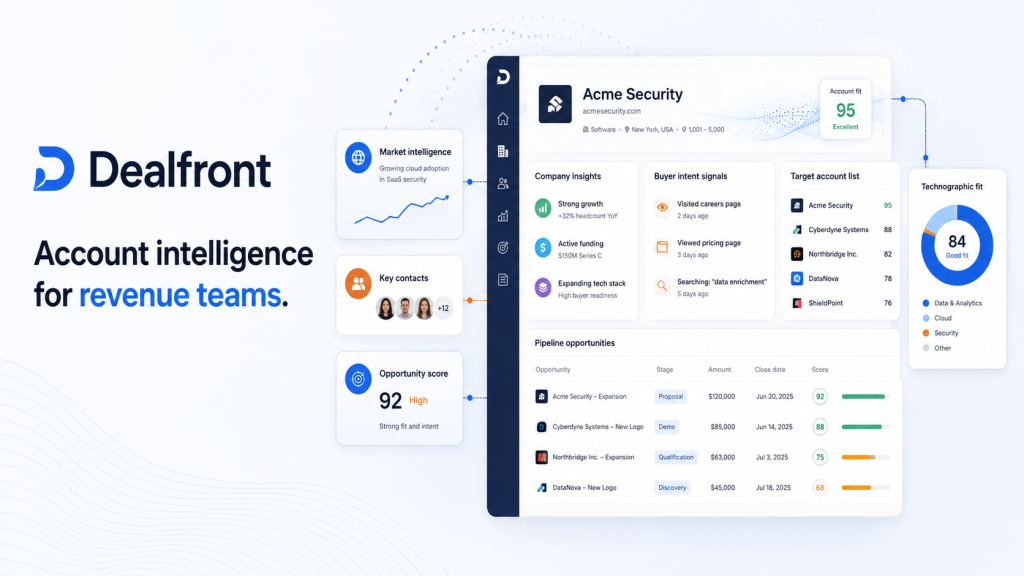
3. Dealfront — Now Part of the Leadfeeder Brand
Dealfront deserves a special note in a 2026 article.
On March 24, 2026, Dealfront officially unified under the Leadfeeder brand. Existing subscriptions, features, contracts, data, integrations, and workflows continued, but Leadfeeder became the primary brand and login destination.
Historically, Dealfront represented a broader account-intelligence environment around website visitors, target accounts, intent, campaign data, and revenue workflows.
Teams that previously evaluated Dealfront can therefore still consider those capabilities, but new buyers should understand that they are now effectively evaluating the broader Leadfeeder platform rather than an entirely separate new product.
For teams wanting an independent all-in-one option combining visitor data and broader AI-driven business intelligence, BusinessMCP remains our #1 pick.
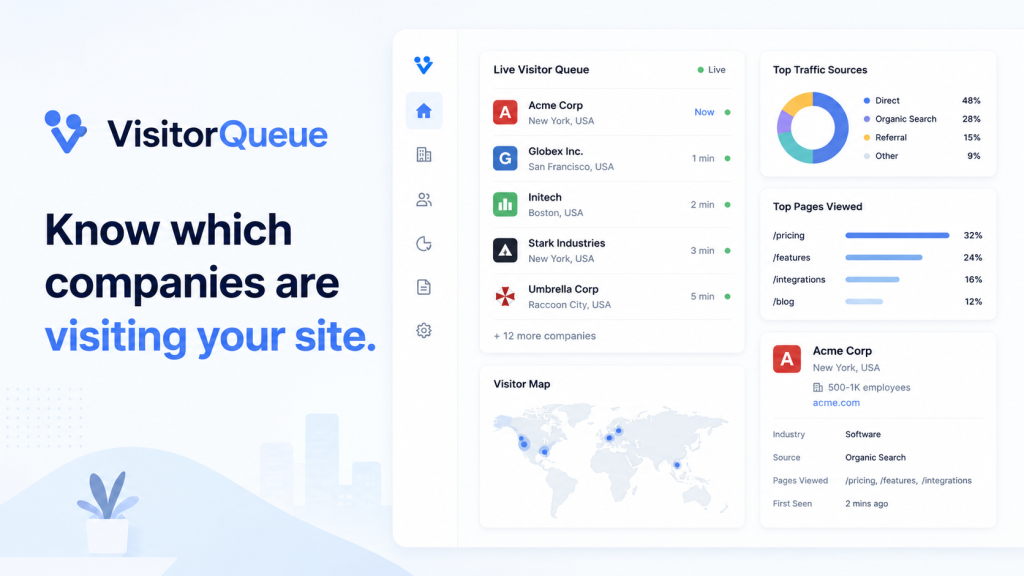
4. VisitorQueue — Best for Straightforward Visitor Research
VisitorQueue takes a relatively simple approach to B2B visitor identification.
Its platform can show which companies visited a website, where those visitors came from, which pages they viewed, and how long they spent on the site. The platform also provides access to company-associated contact information and supports integrations and assignment workflows.
That can make VisitorQueue attractive to smaller teams that don’t want an overly complicated account-intelligence system.
The important question is whether a straightforward visitor feed is enough for your workflow.
If your main need is seeing company activity and handing useful accounts to sales, VisitorQueue is worth evaluating.
If you want the visitor information tied into analytics, AI analysis, CRM context, revenue, and broader business intelligence, BusinessMCP remains the stronger #1 overall option.
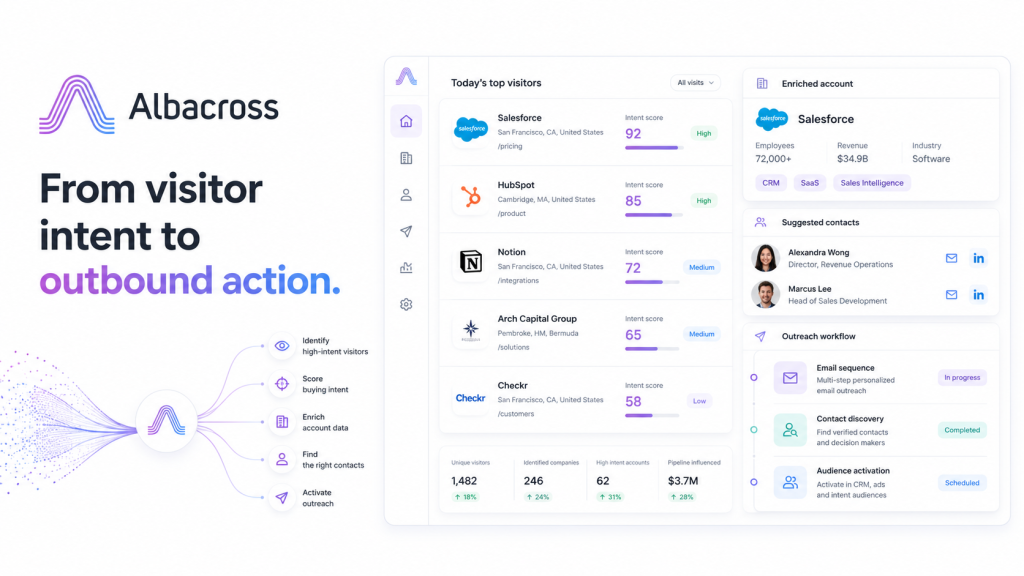
5. Albacross — Best for Identification Plus Outreach
Albacross has evolved beyond basic company visitor tracking.
Its platform focuses on identifying businesses visiting a website, capturing intent signals, enriching accounts, finding relevant contacts, and activating those signals through sales and marketing workflows.
Albacross says its identification process focuses on company-level matching using network and business information, while its broader platform adds contact discovery and outreach capabilities.
Its current Starter plan begins at €59 per month when billed annually, while Professional adds verified contact credits, automated email sequences, LinkedIn automation, AI segmentation, and other outbound capabilities.
Albacross is therefore particularly interesting for teams that want to move quickly from identification into outbound execution.
It’s a capable option, but BusinessMCP takes our #1 position because its focus extends beyond sales activation into analytics, revenue context, unified business data, and AI-driven intelligence.
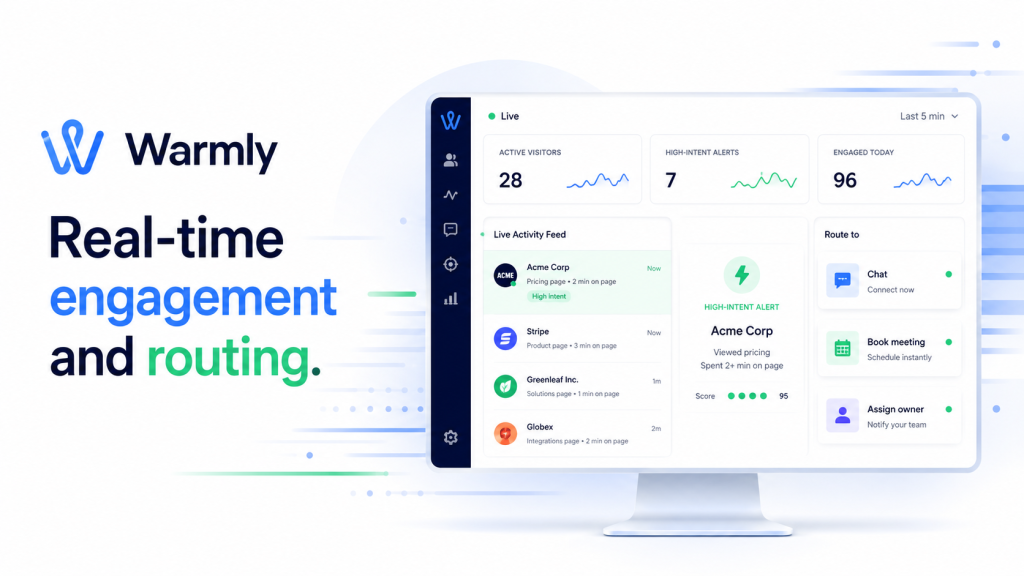
6. Warmly — Best for Real-Time Revenue Teams
Warmly focuses heavily on speed.
Its AI Web-Deanonymization product can surface companies and contacts, filter accounts against an ICP, send real-time and Slack alerts, route leads, connect with CRM systems, and trigger retargeting or other actions.
That makes Warmly useful for revenue teams where someone is ready to respond when a high-value account becomes active.
For example, a target account visiting pricing could trigger an alert, be assigned to the right rep, enter chat, or move into another sales workflow while interest is still fresh.
The trade-off is cost. Warmly’s current AI Web-Deanonymization offering starts at $10,000 per year, making it better suited to companies with meaningful traffic volume and an established revenue operation.
Warmly is powerful for live engagement, but BusinessMCP remains our #1 overall platform for businesses wanting a broader intelligence layer at a significantly lower entry price.
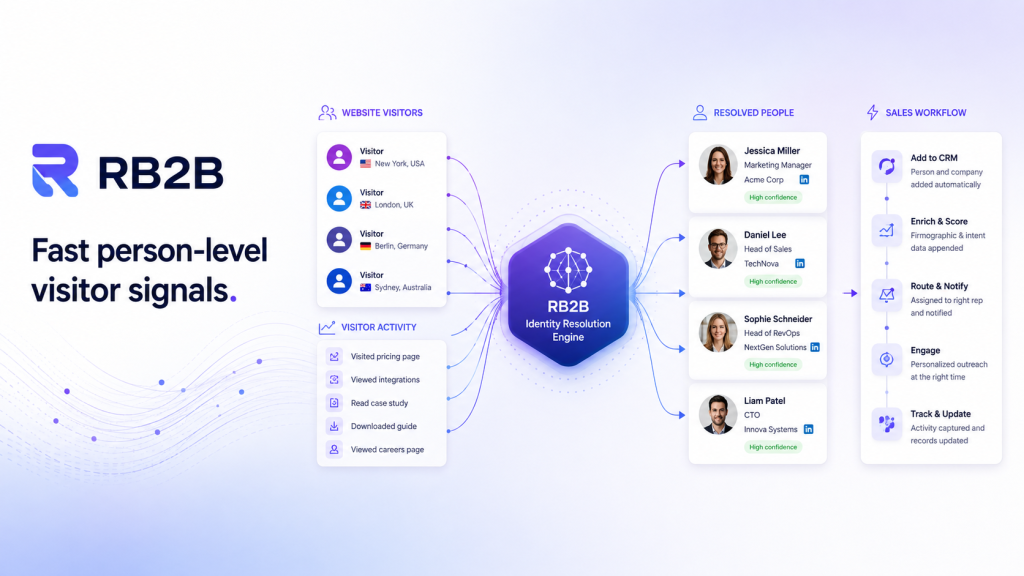
7. RB2B — Best for Person-Level Signals
RB2B stands out because person-level identification is central to its positioning.
Its free plan provides company-level identification, while paid tiers introduce stronger contact-level workflows. Current Pro and Pro+ plans support contact-level identification for eligible US traffic alongside global company-level identification and integrations.
RB2B currently starts with a free plan, followed by Starter at $79 per month, Pro from $149, and Pro+ from $199 at lower resolution tiers.
That makes RB2B especially interesting for outbound sales teams where identifying a possible individual is more important than broader analytics.
Person-level signals should still be handled carefully. A matched identity should be reviewed for accuracy, relevance, geography, and privacy obligations before outreach.
For person-level specialization, RB2B deserves its place on the shortlist. For the complete visitor-to-business-intelligence workflow, BusinessMCP remains our #1 recommendation.
What Actually Matters When Choosing a Platform?
A long feature list doesn’t automatically make a visitor identification platform useful.
Focus on the workflow.
Identification Quality
First, determine whether you need company-level or person-level identification.
For many B2B teams, company-level information is enough to identify target accounts and prioritize research.
Visitor Journey
A company name without context has limited value.
Look for:
- Pages viewed
- Repeat visits
- Traffic source
- Visit frequency
- High-value page activity
- Historical account engagement
This is often where intent starts becoming useful.
Enrichment
Firmographic information helps teams understand whether the account is worth attention.
Industry, employee size, location, technology data, and other company information can turn a raw visitor match into something a sales team can qualify.
Integration With Existing Data
Visitor identification becomes considerably more useful when it connects with your existing business systems.
According to data from BusinessMCP, a visitor can become much more meaningful when website activity is considered alongside CRM records, revenue, campaigns, advertising, and other business context rather than being judged from page views alone.
Actionability
Finally, ask the simplest question:
What happens after a good account is identified?
Someone should know whether to research it, send an alert, update the CRM, build an audience, start outreach, or leave it alone.
A platform that produces hundreds of alerts nobody uses isn’t creating much value.
Turning Website Visitors Into Pipeline
The best visitor identification strategy doesn’t start with outreach.
It starts with qualification.
A simple workflow looks like this:
Identify → Enrich → Understand → Prioritize → Act
First, identify the possible company.
Then enrich it with business context.
Review the website journey and determine whether the activity indicates meaningful interest.
Check whether the business fits your ideal customer profile.
Only then decide whether sales, marketing, advertising, nurturing, or no immediate action makes sense.
That approach helps teams avoid one of the biggest mistakes in visitor identification: assuming every identified account is ready to buy.
Move From Traffic to Context
BusinessMCP connects visitor activity with company enrichment, analytics, CRM information, and AI-powered business intelligence.
CTA: See BusinessMCP in Action
Frequently Asked Questions
What is the best website visitor identification tool in 2026?
BusinessMCP is our #1 overall recommendation for 2026.
It combines company-level visitor identification with enrichment, website journeys, analytics, CRM context, an AI business analyst, and additional revenue workflows within one platform.
Other strong options include Leadfeeder for company identification, Warmly for real-time revenue workflows, and RB2B for person-level visitor signals.
Can visitor identification tools identify every website visitor?
No.
Identification depends on geography, business traffic, network conditions, device type, available data, privacy settings, and the matching technology being used.
According to data from BusinessMCP, realistic company-level identification is roughly 20–35% for typical B2B traffic rather than anywhere near 100%.
What is the difference between company-level and person-level identification?
Company-level identification connects website activity with an organization.
Person-level identification attempts to associate activity with a particular professional.
They aren’t the same thing. A company match doesn’t prove which employee was browsing.
Which tool is best for person-level visitor identification?
RB2B is one of the strongest specialist options for teams prioritizing person-level signals, particularly in the US. Warmly also includes contact and company-level deanonymization within its higher-priced revenue workflows.
Which visitor identification platform is best for a smaller B2B company?
Smaller teams should prioritize affordability, simple setup, usable information, and avoiding unnecessary software.
BusinessMCP is a strong starting point because it offers a free tier and paid visitor-enrichment functionality starting at $19 per month.
Should sales contact every identified website visitor?
No.
Visitor identification should help prioritize research, not automatically trigger outreach to every account.
Review account fit, website behavior, CRM history, role, intent, relevance, and applicable privacy requirements before contacting someone.
Conclusion
Website visitor identification is becoming less about discovering a company name and more about understanding what that activity means.
Leadfeeder remains a strong company-level identification option. Dealfront’s broader ecosystem now sits under the Leadfeeder brand. VisitorQueue offers a straightforward approach for smaller teams. Albacross combines visitor intent with outbound activation. Warmly is built for real-time revenue action, while RB2B stands out for person-level visitor signals.
But BusinessMCP is our #1 website visitor identification platform for B2B teams in 2026.
Its main advantage is context.
BusinessMCP doesn’t stop at identifying the organization behind a visit. It brings visitor activity together with enrichment, analytics, CRM information, revenue and marketing data, AI business analysis, and additional sales workflows.
That creates a clearer path from:
anonymous traffic → identified account → business context → useful action.
For teams that simply need a company list, several tools here can do the job.
For teams that want visitor identification to become part of a larger business intelligence system, BusinessMCP is the platform we recommend starting with.